Ka Young Kim

Ka Young Kim

Ph.D. student · CAMP, Technical University of Munich

About

I am a Ph.D. student at the Technical University of Munich (TUM), advised by Prof. Nassir Navab at the Chair for Computer Aided Medical Procedures (CAMP). My research focuses on AI in healthcare, particularly computer vision methods for understanding and assisting laparoscopic and robotic surgery.

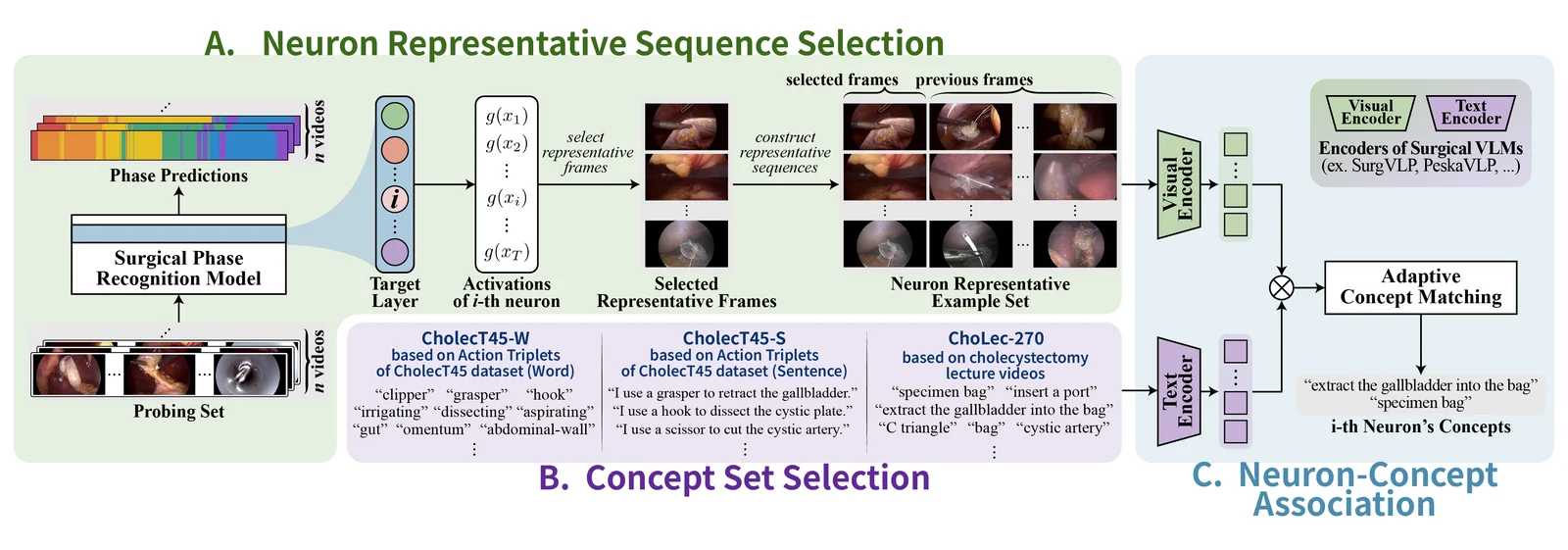
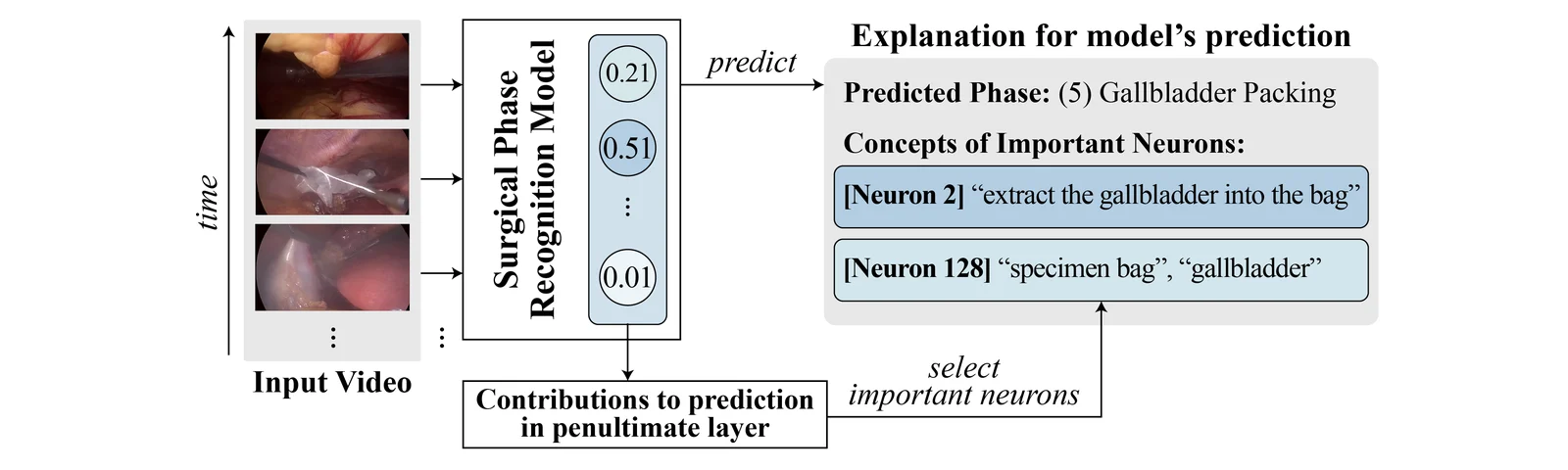
Before joining TUM, I received my M.S. from Kyung Hee University under Prof. Seong Tae Kim in the AugMented Intelligence (AMI) Laboratory. I am especially interested in enabling AI to understand surgical scenes and to interact with the people in the operating room. My recent work covers surgical scene graphs, concept-based explanations of surgical phase recognition, and benchmarks that test whether vision-language models really look at the surgical image.

News

Education

Publications

Google Scholar
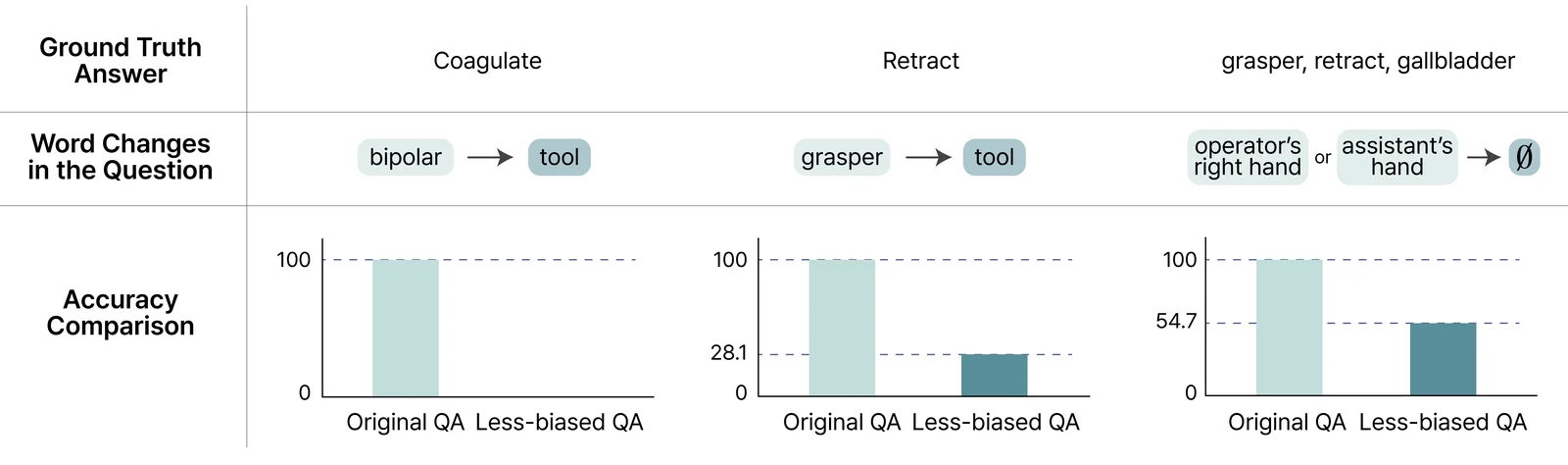
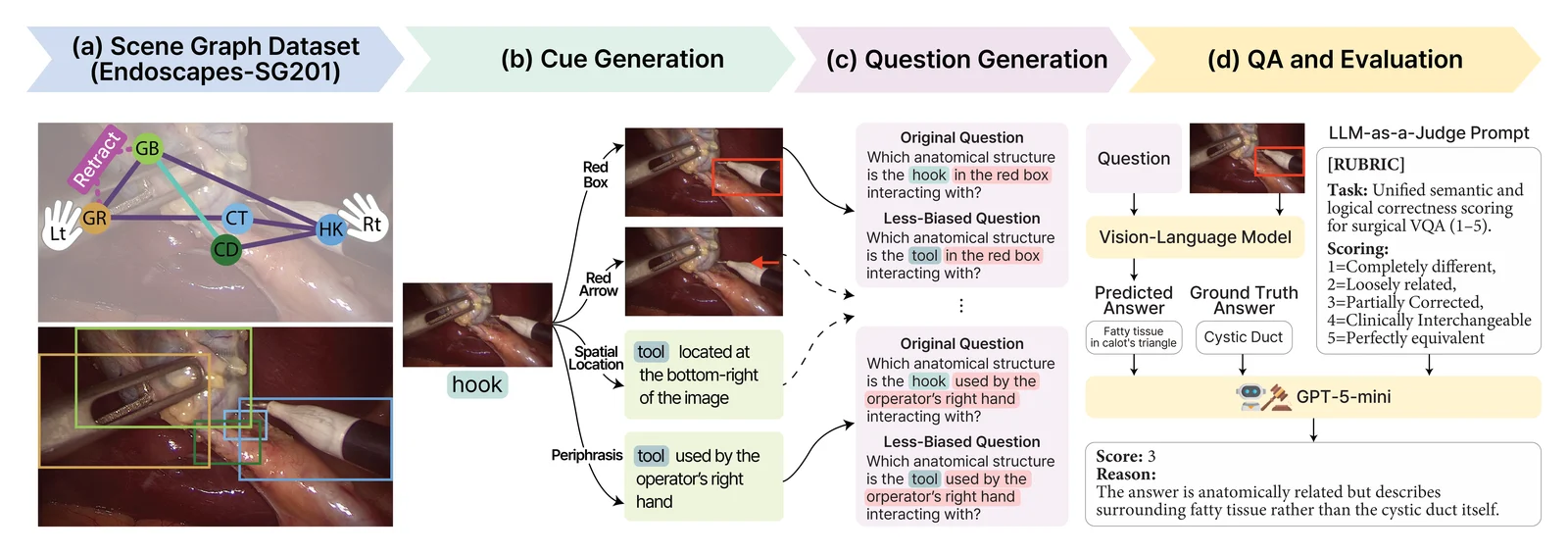
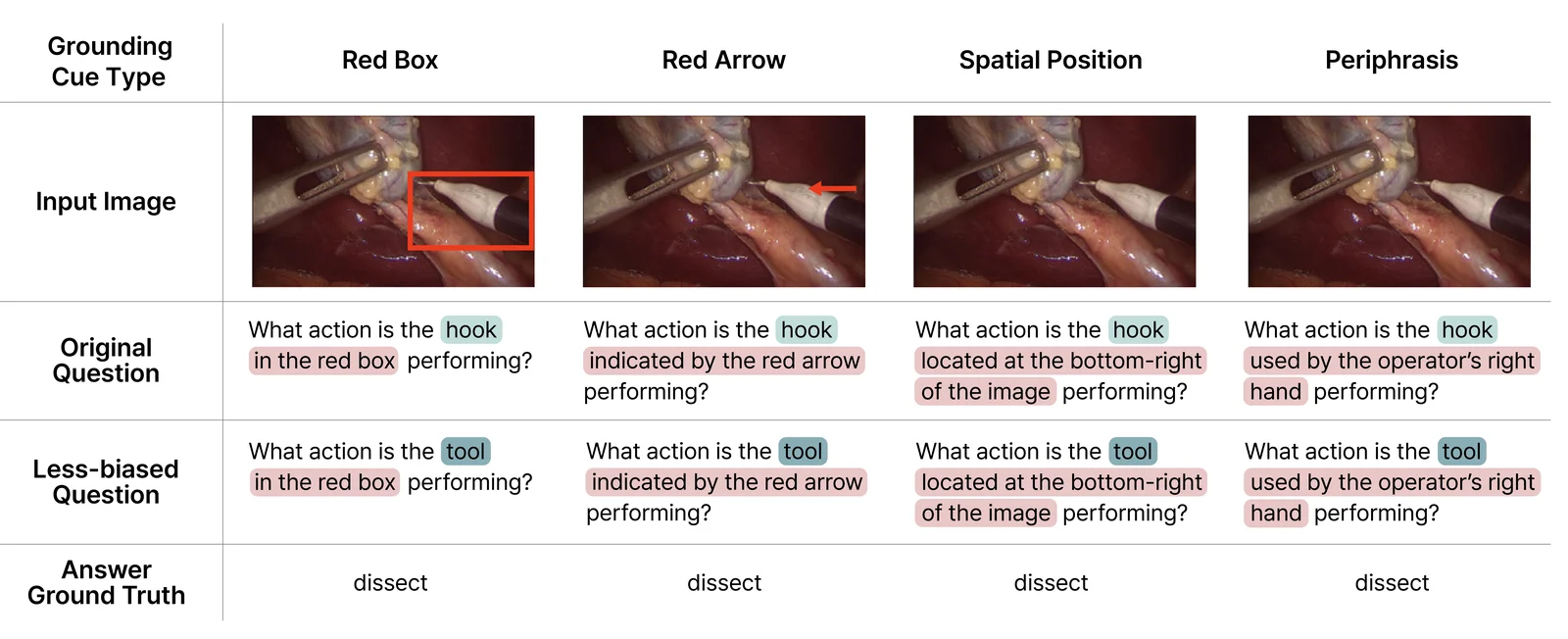
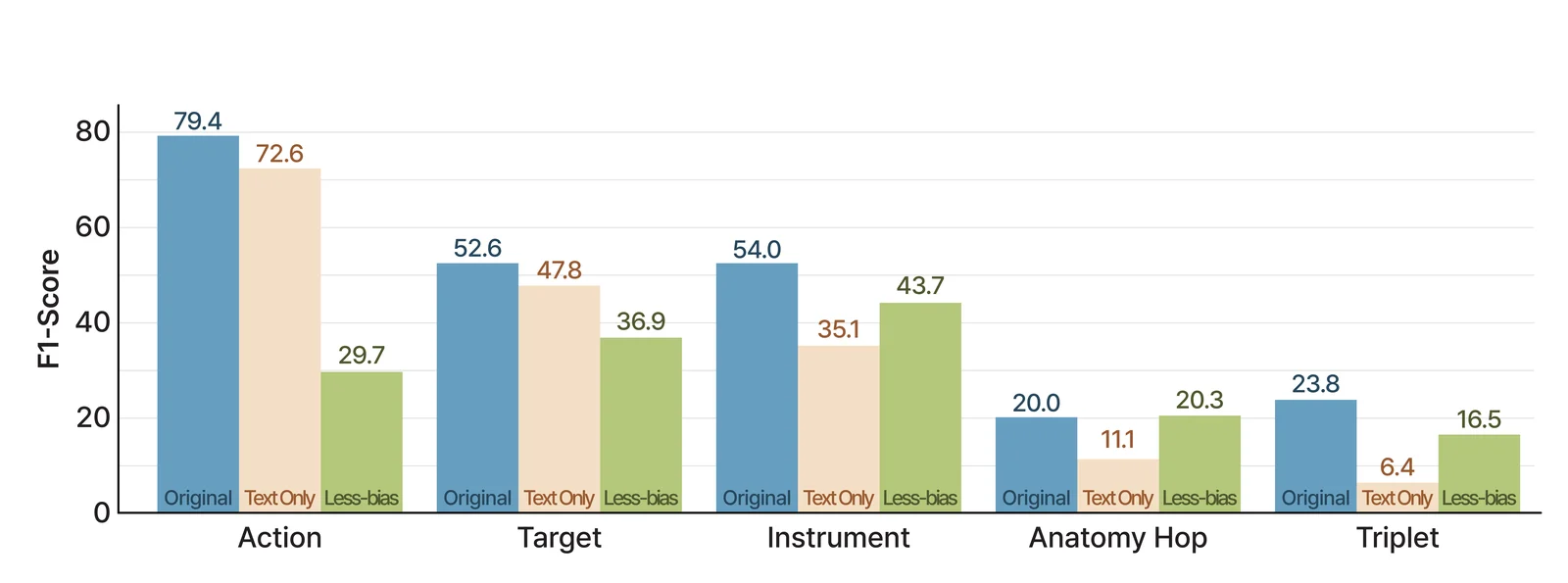
Removing entity names from a question while keeping the image and answer fixed causes a large accuracy drop.SurgCheck pipeline from scene graph to grounding cues, paired questions and LLM-judged evaluation.The four grounding cues: red box, red arrow, spatial position and periphrasis.Text-only ablation: action and target scores barely drop without the image.
01 / 04

SurgCheck: Do Vision–Language Models Really Look at Images in Surgical VQA?

Jongmin Shin†, Ka Young Kim†, Eunki Cho, Seong Tae Kim*, Namkee Oh*

Information Processing in Computer-Assisted Interventions (IPCAI), 2026

Take the names out and see what is left. Every surgical frame gets a question with entity names and a twin that points with a box, an arrow, a position or a description instead. Five VLMs drop on the twin even though the image and the answer stay the same, so much of the score comes from the wording rather than the image.
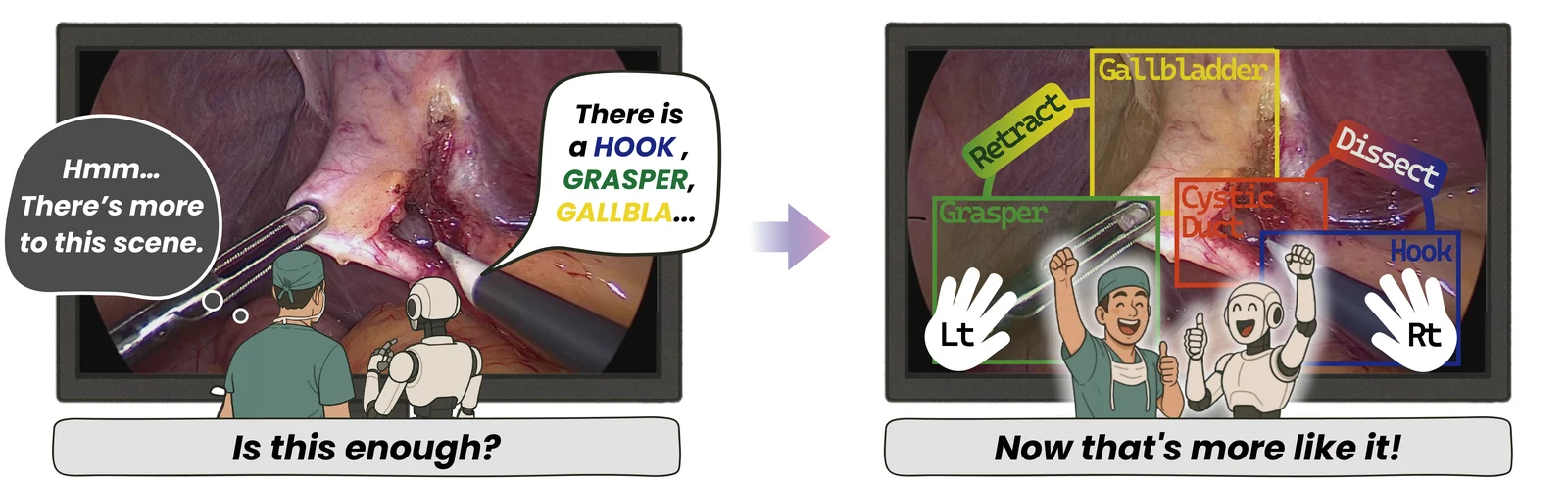
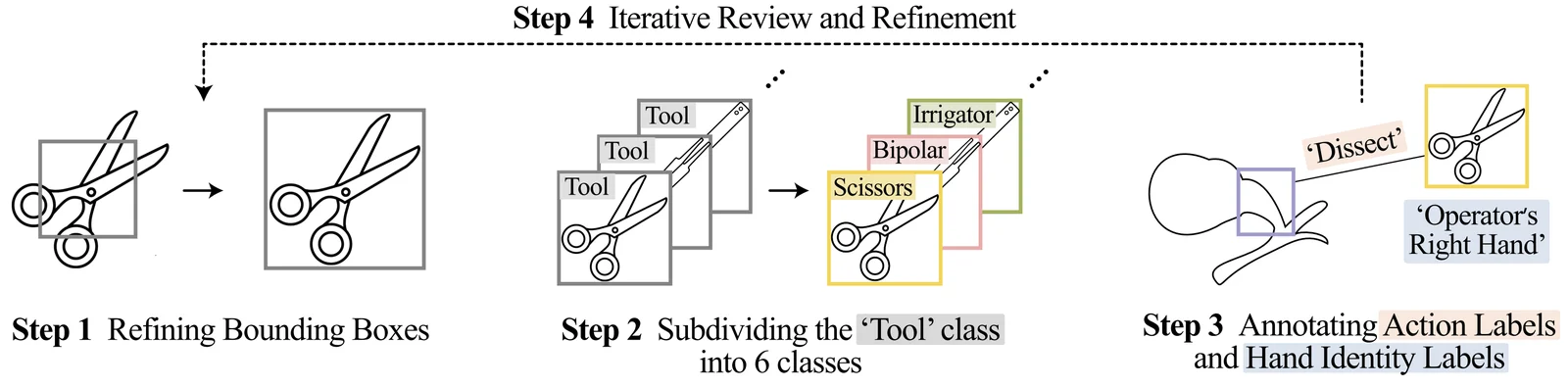
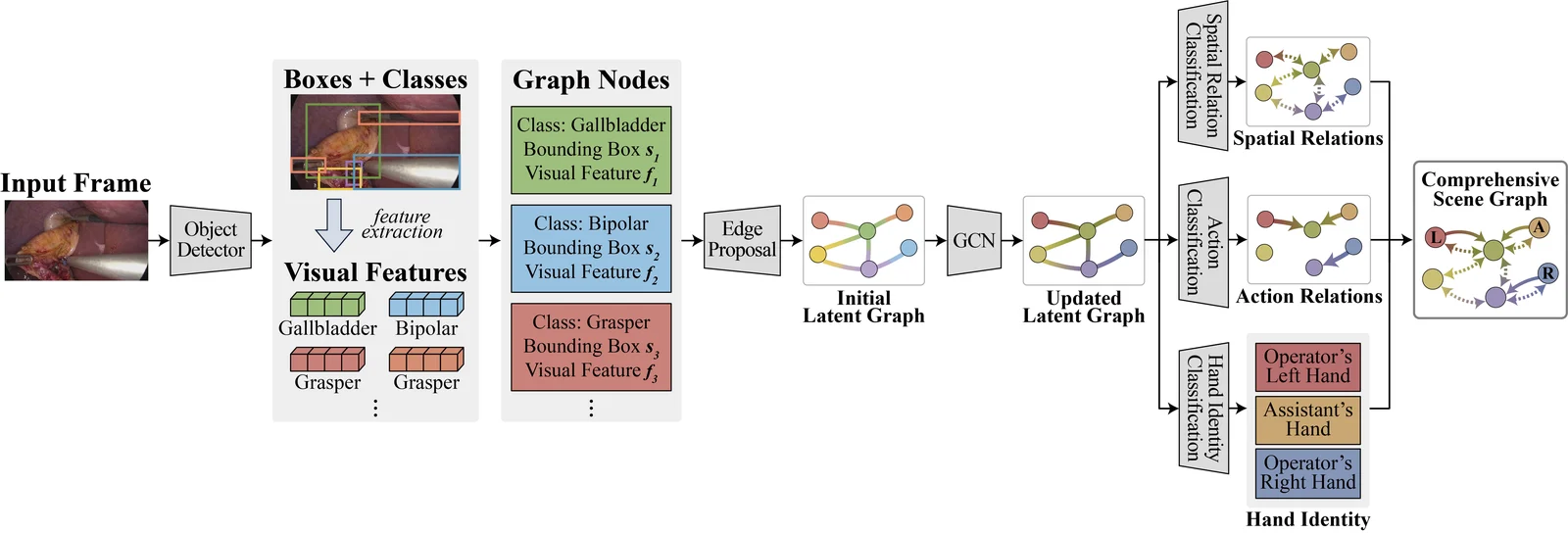
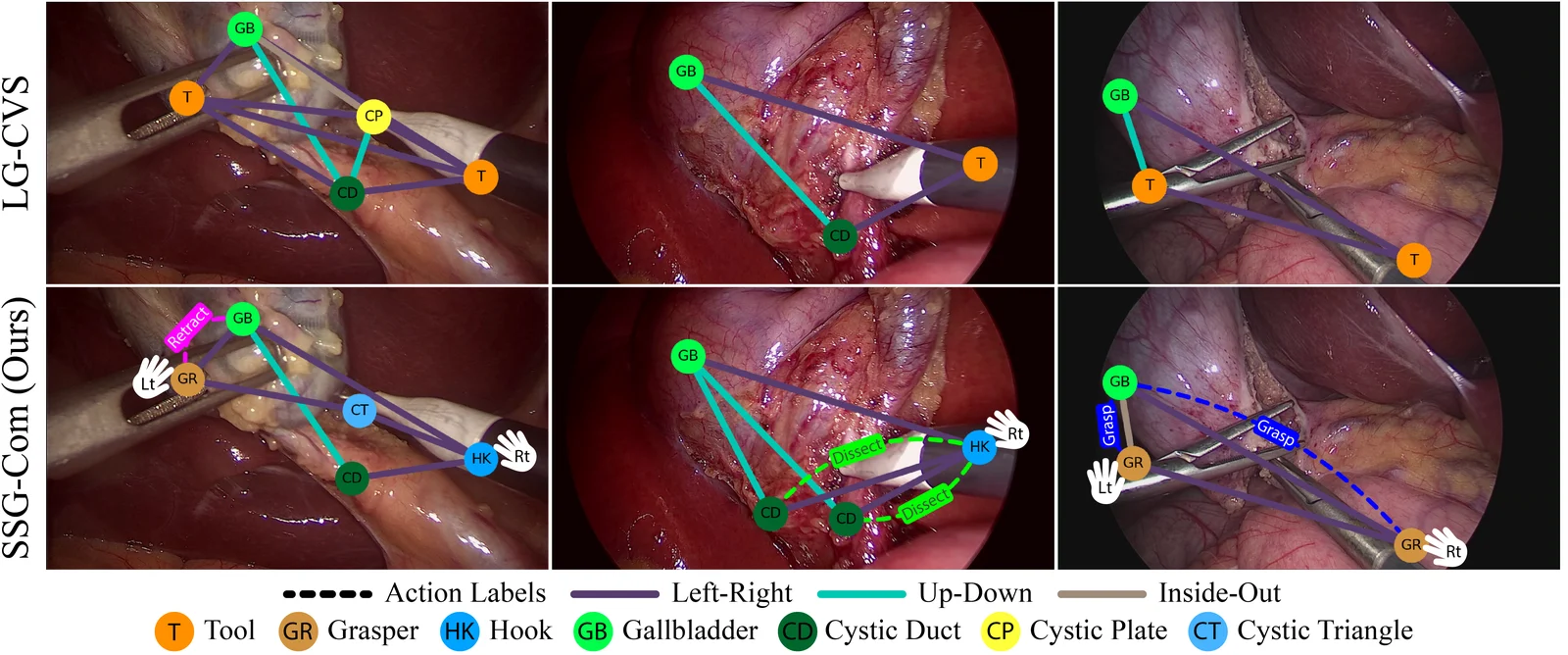
Motivation: a scene graph that knows the tools, their actions and which hand operates them.Endoscapes-SG201 construction: refined boxes, six tool classes, action labels and hand identity.SSG-Com overall architecture.Qualitative scene graphs from LG-CVS and SSG-Com.
01 / 04

Towards Holistic Surgical Scene Graph

Jongmin Shin†, Enki Cho†, Ka Young Kim†, Jung Yong Kim, Seong Tae Kim*, Namkee Oh*

Medical Image Computing and Computer Assisted Intervention (MICCAI), 2025

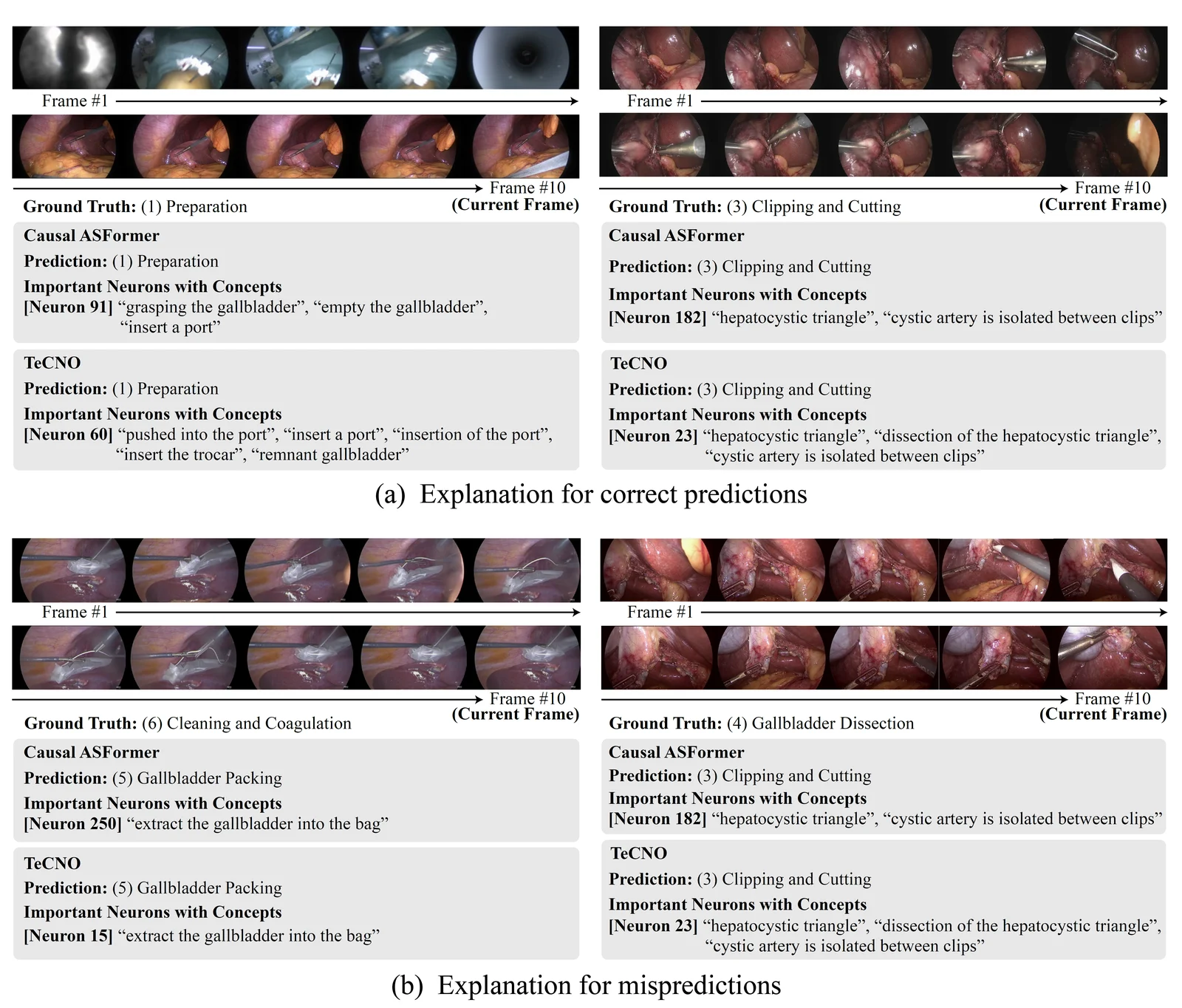
Which hand holds the tool, and what it does to which tissue. Endoscapes-SG201 adds tool, action, target and hand identity to surgical scene graphs, and SSG-Com learns these relations to improve critical view of safety assessment and action triplet recognition.

* Corresponding author  ·  † Equal contribution